

Red
Showing 13–19 of 19 results
-
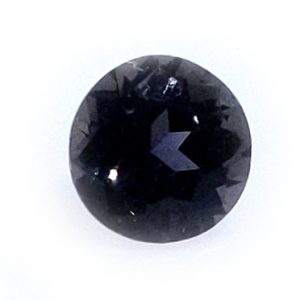
Songea (Tanzania) Round Green Violet Purple Unheated Sapphire 0.77 Carats 5.3×5.3mm
$89.00 View Details -
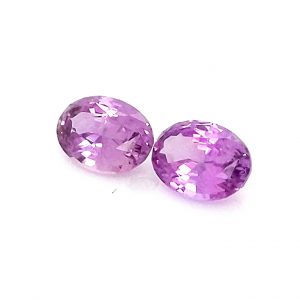
Sri Lanka Oval Cut Purple Sapphire Pair 1.89 cts – 7×5 mm
$922.00 View Details -
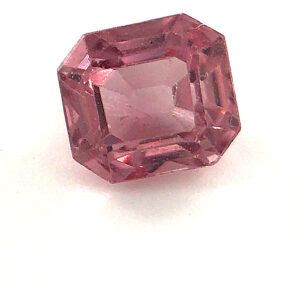
Sri Lanka Pink Emerald Cut Sapphire 0.71 carats 5.6×4.4mm
$269.00 View Details -
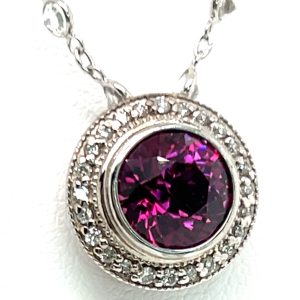
TOP Quality Madagascan Round Brilliant Rhodolite (N)* Diamond Halo & White Sapphire By the Yard Necklace 18KWG 8.53 ctw
$6,200.00 View Details -
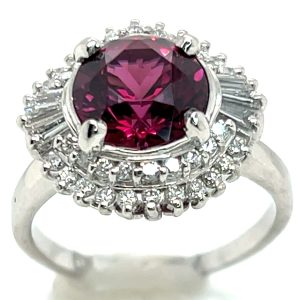
Top Quality Rhodolite (N)* Diamond Halo Platinum Ring 5.35 ctw
$6,500.00 View Details -
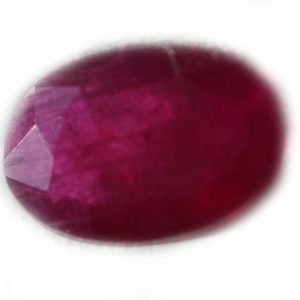
Unheated Indian Ruby Oval 0.69 carats 7.2×5.0x1.9mm
$207.00 View Details -
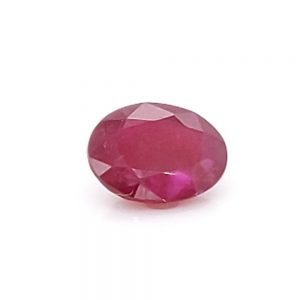
Unheated Indian Ruby Oval 1.61 carats 8.0×6.3×3.4mm
$644.00 View Details
We generally do not purchase ruby or sapphires have been diffusion or beryllium treated, always exceptions though when we see a standout stone. The finest rubies look like someone painted a swatch of fluorescent red directly across them. It is an almost glowing red, diffused well through the stone, and is rooted from the unique property of fine Rubies, a rich red fluorescence. While Burma (or sometimes called the Mogok Ruby) is the traditional source for the finest rubies, good stones are a rare find anywhere, the best stones contain tiny amounts of rutile silk which give these rubies their awesome crimson glow. Some neat facts and lore concerning rubies:
At Sotheby’s New York’s October 18, 1988 sale, Alan Caplan’s 15.97 ct Burmese ruby sold for $3,630,000, or a startling $227,301/ct (most of ours are less!)
Few named rubies:
167 carat Edwardes ruby (British Museum)
100 carat DeLong star ruby (Am Mus Nat Hist)
138.7 ct Rosser-Reeves star ruby
Many believed that rubies possessed an inner flame which burned eternally.
The Burmese believed rubies ripened like fruit, and that the redder a ruby, the more ripened it was. If a ruby was flawed, it was considered over-ripe.
Although The Black Prince Ruby sits in the Imperial State Crown in London, it is actually a 170 carat spinel